
• Case ID: #32
  • Primary Personality Archetype: 🌱 The Steward (Rigidity Bias)
  • Systemic Risk: Accounting Contagion (The Shadow Debt)
  • Financial Impact: $3.2M Estate Liability / Forced Asset Liquidation sc:05:Jurisdiction: Federal / National (Australian Corporations and Tax Law)
  • Jurisdiction: Federal / National (Australian Corporations and Tax Law)
  • Verification: Division 7A Compliance Audit / Registry Archive #32
Reading Time: 2 minutes

Case File #32: The Loan Account

The Shadow Debt

Brian used his company like a private bank for twenty years. Every house renovation and holiday was funded by the 'Director Loan Account.' He assumed the debt was an accounting fiction that would die with him. He was wrong.

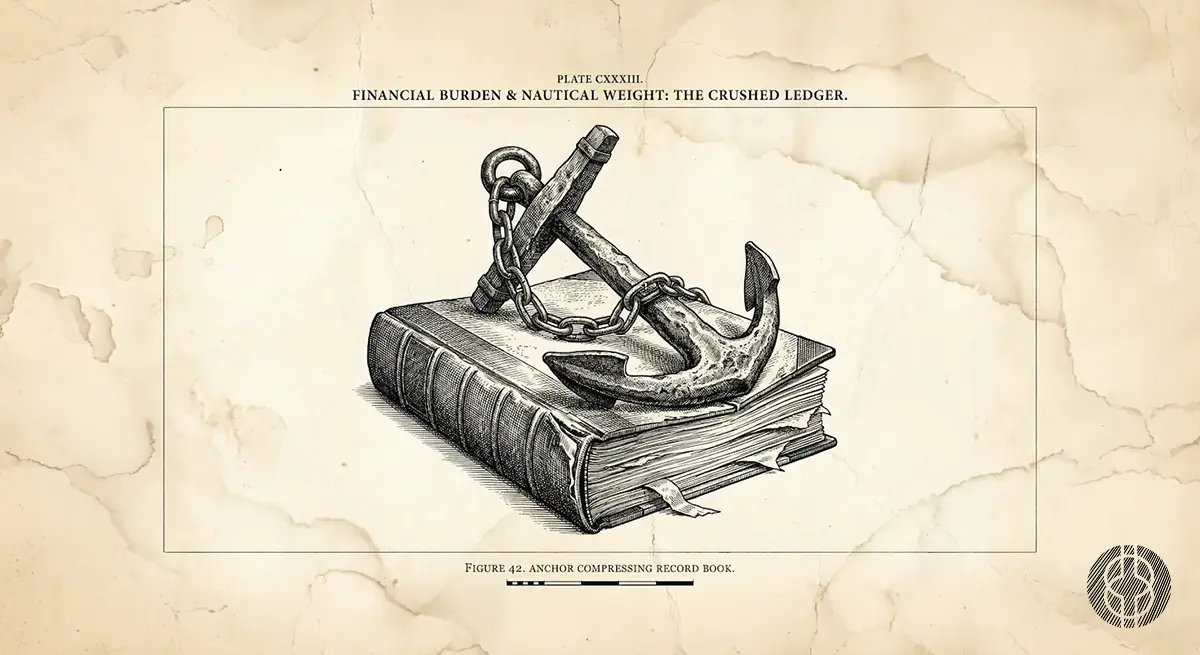
When Brian passed, the company—now controlled by a corporate trustee—was legally required to recover all outstanding debts to protect creditors. Brian’s estate was sued by his own company for $3.2M. His widow was forced to sell the family home just to repay the 'loans' Brian thought were gifts. The accounting entries he ignored became the anchor that sank his family’s future.

  • Clinical Mystery: Why did a retired director owe the ATO $400k for money he already spent?
  • The Human Intent: To treat 'Company Profit' as 'Personal Drawings' without declaring them as dividends
  • The Diagnosis: The Div7A Ambush: The tax office views 'informal loans' as taxable income if the paperwork isn't clinical

Case File: Forensic Analysis

🔬 REGISTRY FILE: CLINICAL PATHOLOGY

The Artifact: The 'Handshake' Agreement

The Intent: To build a business based on mutual trust without 'wasting' funds on legalised exit strategies

The Reality: 'Structural Paralysis', where the death of a partner introduces an unintended and unskilled 'Silent Partner' with veto power

Pathology: This is a failure of the Navigator Archetype. The brain prioritises 'Forward Momentum' and 'Relational Trust' while ignoring 'Structural Finality'. It assumes the partnership is between two people, failing to realise it is actually a contract between two estates

The Legal Reality:  Under Australian Law, without a formal 'Buy-Sell Agreement', shares in a private company are treated as personal property. They pass to the next of kin, who may have no interest or ability to run the firm but possess the full legal rights of the deceased to block corporate actions

🟢 ARCHITECTURAL PROTOCOL: SYSTEMIC FIX

The Antidote: The Funded Buy-Sell Protocol. 1. Formalise a 'Shareholders Agreement' with a specific 'Trigger Event' clause. 2. Implementation: Fund the agreement with 'Buy-Sell Insurance' so the surviving partner has the cash to buy out the estate

The Result: You transition from a 'Vulnerable Partnership' to an 'Unsinkable Enterprise'. You ensure the business survives the person

The Sobering Script: 'I read about 'The Frozen Ship of Business'. Two mates built a ten-million-dollar firm, but when one died, his widow took control and accidentally sank the company because she did not know how to run it. I want to make sure that if something happens to me, you get the cash you need, and my business partner gets to keep the company moving. Let's look at a 'Funded Buy-Sell Agreement'. I want to make sure the keys to the business are never held hostage by a tragedy'

Sorry, this website uses features that your browser doesn’t support. Upgrade to a newer version of Firefox, Chrome, Safari, or Edge and you’ll be all set.